Purva Northern Lights RERA Overview
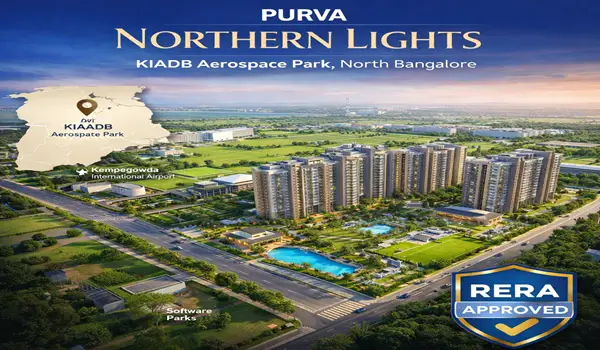
The Purva Northern Lights RERA registration was issued by the Karnataka Real Estate Regulatory Authority on 12 March 2026. The project carries phase-wise registrations: Phase 1: PR/120326/008523, Phase 2: PR/120326/008524, and Phase 3: PR/120326/008525. RERA approval means 70% of buyer payments must be held in an escrow account against project-specific spend — that protection is one of the structural reasons banks now extend home loans against this project.
Purva Northern Lights Hardware Park is a premium new launch luxury apartment by Puravankara Group. The project is now in the launch stage. The builder has submitted all documents to the Karnataka RERA Authority. The RERA number was received on 12 March 2026. After that, the official RERA certificate will be shown on the Karnataka RERA portal for public view.
The RERA number has been received, and buyers can see all project details on the RERA website. These details include approved layouts, timelines, carpet areas, and legal documents. This makes the home buying process more transparent and easier to trust.
RERA Information:
Purva Northern Lights is officially RERA-approved and has been launched. Below is the information,
- Purva Northern Lights RERA Number: PRM/KA/RERA/1251/309/PR/120326/008523
- Purva Northern Lights Phase 2 RERA Number: PRM/KA/RERA/1251/309/PR/120326/008524
- Purva Northern Lights Phase 3 RERA Number: PRM/KA/RERA/1251/309/PR/120326/008525
About Purva Northern Lights Project
Purva Northern Lights KIADB Aerospace Park is a large, luxurious apartment project in North Bangalore. The project is located in the KIADB Aerospace Park, Hardware Park. This area is growing fast and is becoming a popular place for new homes and offices.
The project is now in the pre launch stage. This means the builder is getting all legal approvals ready before starting sales. After RERA approval, the builder can start official bookings. The builder can also share approved master plans, floor plans, and possession dates as per RERA rules.
This project is planned to give families a calm life. It is planned with green open spaces. It is planned with good roads. It is planned with safe play areas in mind. It is planned with everyday life services in mind.
What is RERA and why is it important
RERA is a government body. The full form is Real Estate Regulatory Authority. This body was made to protect homebuyers. This body helps to make real estate safe and honest.
RERA makes sure that builders provide only true and correct information. RERA makes sure that builders complete projects on time. RERA makes sure that builders follow quality rules.
RERA is very important for every housing project in India. The RERA Karnataka project status shows that a project follows legal rules. This makes buyers feel confident and relaxed.
What RERA Means for Buyers
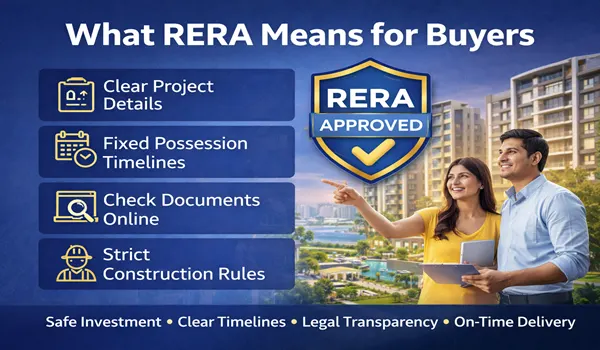
When Purva Northern Lights gets RERA approval, buyers will feel safe. Buyers will feel confident. Buyers will feel sure about their investment.
When a project is RERA registered, it offers many protections:
- Buyers get clear project details.
- Buyers get fixed possession timelines.
- Buyers can check project documents online.
- Builders must follow strict construction rules.
These rules make sure that buyers do not face problems later.
Advantages of RERA Approved Apartments in Bangalore
There are many benefits of buying RERA approved apartments in Bangalore:
- True Information: Buyers get correct details about size and design.
- On Time Completion: Builders must complete work on time.
- Protected Funds: Buyer's money is held in a separate bank account.
- Buyer Protection: Buyers can file a complaint if they encounter any issues.
- Better Quality: Builders must follow quality rules.
- Fixing Defects: Builders must repair any defects after possession.
- Fair Dispute Support: Buyers get fast help through RERA.
These benefits make RERA approved homes very safe.
Why RERA Approval Matters for Purva Northern Lights
For Purva Northern Lights, RERA approval is a sign of trust. It shows that the project is legal and complies with government regulations.
With RERA approval:
- Buyers’ money is safe
- Timelines are fixed
- Builders must finish work on time
- Progress updates are shared with RERA
This gives full safety to buyers.
What Buyers Can Expect After RERA Approval
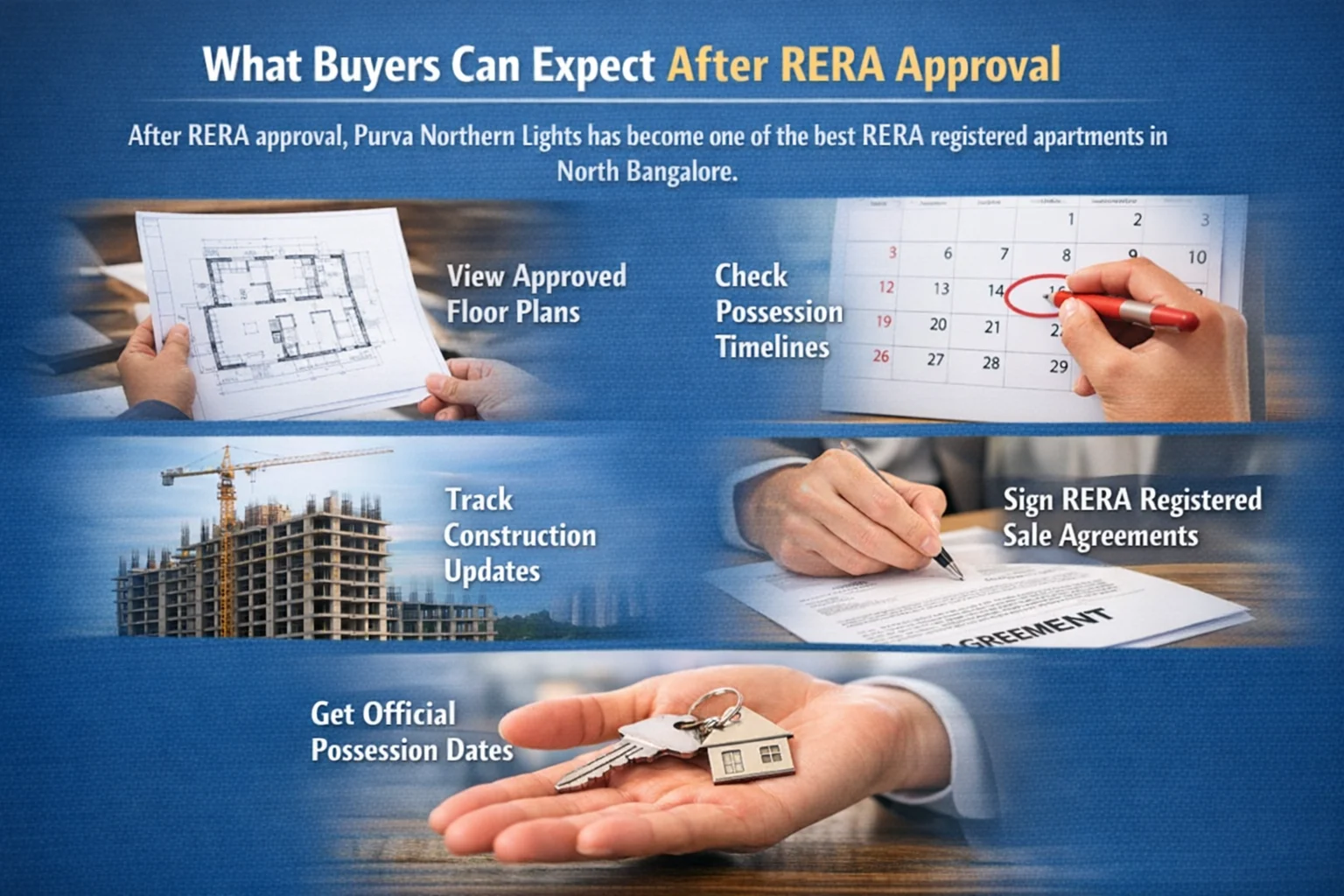
After RERA approval, Purva Northern Lights has become one of the best RERA registered apartments in North Bangalore.
Buyers can:
- View approved floor plans.
- Check possession timelines.
- Track construction updates.
- Sign RERA registered sale agreements.
- Get official possession dates.
How to Check Purva Northern Lights RERA Status Online
Buyers can easily check project details:
- Visit the Karnataka RERA portal.
- Search Purva Northern Lights.
- View the RERA number and approval status.

 24/7 Support
 Free Site Visit
 Unmatched Price