
From Orchards to Aerospace: The Unstoppable Rise of the North Bangalore Corridor
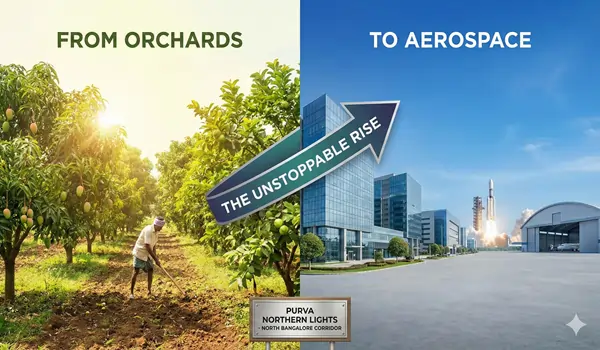
Forty years ago, Bagalur and Devanahalli felt slow and peaceful. There were open farms. Long stretches of green land. Cool breeze in the evenings. Hardly any traffic. People knew each other by name. No one called it an investment hotspot.
Fast forward to 2026. The same land now sits at the center of India’s fastest growing tech corridor. The change did not happen overnight. It moved step by step.
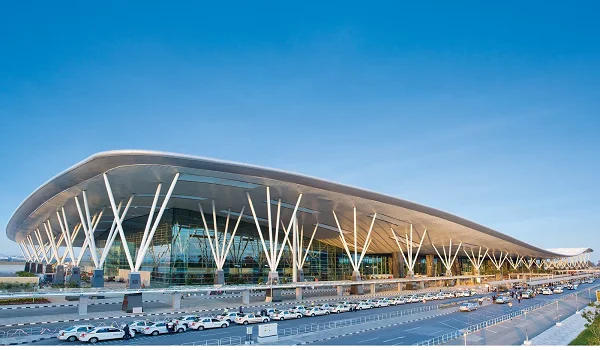
The first big shift came in 2008. The opening of Kempegowda International Airport changed the direction of growth. Suddenly, the north side of the city was not “far.” It became strategic. Then came planning.
The KIADB Aerospace Park began shaping the future of this belt. What was once farmland slowly turned into structured industrial land. Large campuses replaced fields. Global names entered the picture.
Boeing set up major operations. SAP Labs expanded. Shell built its presence. These were not small offices. They brought real jobs. High paying jobs. Thousands of professionals started working here every day.
That is when housing demand began to rise.
Unlike older parts of Bangalore that grew without space, the north had room to breathe. Roads were wider. Layouts were better planned. Large parcels allowed proper zoning.
By 2026, this growth has entered what many call its golden phase.
The Satellite Town Ring Road is improving outer connectivity. The Blue Line Metro is moving closer to the airport belt. Travel feels easier. Movement feels smoother.
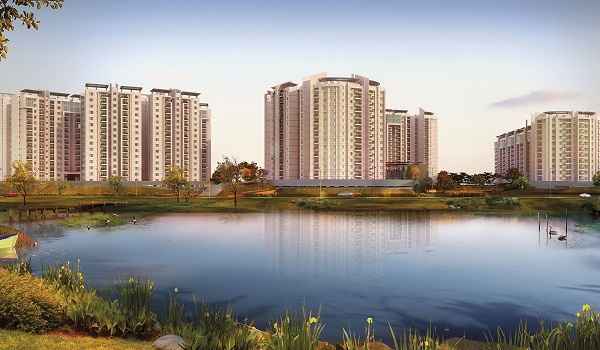
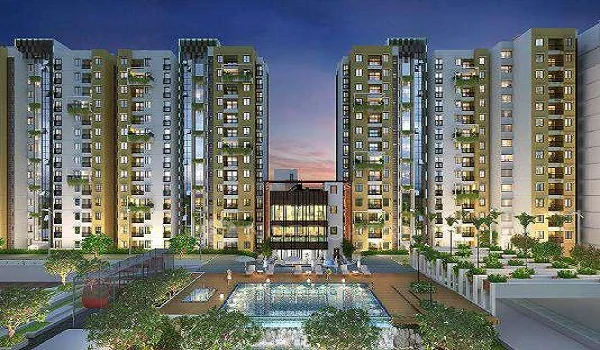
In the middle of this transformation stands Purva Northern Lights. The land it occupies was once part of that quiet landscape. Today, it spreads across 25 acres inside the Aerospace Park belt.
The project offers 80 percent open space. A one lakh square foot clubhouse. Wide internal roads. It reflects how the area has evolved from rural calm to urban design.
For investors, the story matters.
South and East Bangalore filled up quickly over the years. Prices rose. Traffic increased. Space reduced. North Bangalore moved slower. It allowed better planning and larger developments. Now the payoff is visible.
With more than 25,000 high value jobs linked to the Aerospace Park, demand for quality housing continues to grow. Buying into Purva Northern Lights Bangalore in 2026 is not only about a flat. It is about being part of a long journey.
A journey that changed farmland into one of Karnataka’s strongest growth corridors.
The Airport Catalyst: Beyond 2008
When the airport opened in 2008, many people thought it was just a travel upgrade. A new terminal. Better flights. Faster check in. That was the basic view.
But the airport did something bigger. It changed how the north side of Bangalore was seen.
Land that once felt distant suddenly became close to global routes. Investors started paying attention. Developers started planning ahead.
Now in 2026, the story has moved much further.
Airport City Phase 2 is turning the area around the terminal into more than a travel zone. Business parks are rising. Hotels are expanding. Retail streets are growing. The airport is no longer just a place to catch a flight. It is becoming a full business district.
This shows the real impact of BLR Airport on North Bangalore property.
When an airport grows, housing demand usually follows. Executives who travel often prefer to live nearby. Airline staff look for homes close to work. Business visitors increase short stay demand.
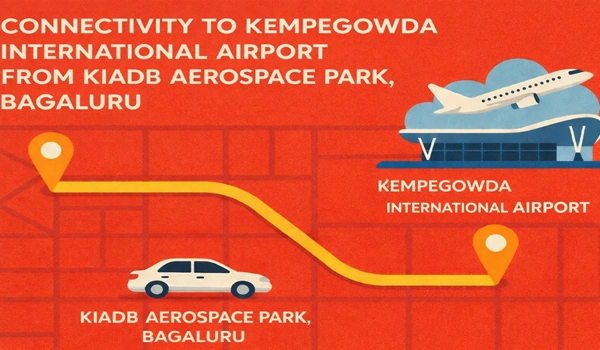
For residents of Purva Northern Lights, the airport is about 15 minutes away. That changes daily life. International travel becomes easier. Guests from abroad reach home faster. Weekend hotel dining or shopping is just a short drive.
But the effect is not only lifestyle based.
Property value often moves with airport expansion. When global connectivity improves, investor interest rises. New offices come in. Support services grow. Employment spreads across sectors.
This steady growth adds strength to the corridor.
North Bangalore did not grow by chance. The airport acted as the first push. Then industries followed. Then housing.
In simple terms, the airport planted the seed. Airport City Phase 2 is helping it grow further.
And for property owners in this belt, that long term connectivity continues to support value and demand.
The SEZ Revolution: Boeing and Beyond
There was a time when this belt was known for farms. Today, it is known for global offices.
The rise of the KIADB Aerospace Park changed the identity of the area. Fields slowly gave way to planned campuses. Wide gates. Glass buildings. Research centers.
In 2026, the list of companies in KIADB Aerospace Park 2026 reads like an international directory.
Boeing’s BIETC has a strong presence here. SAP Labs operates large teams. Shell has its tech center in this corridor. Along with them, several aerospace and engineering firms are active inside the park.
This shift changed the people who live nearby.
Instead of farm workers and small traders, the area now attracts engineers, analysts, designers, and global managers. Many are young. Many have worked abroad. They look for organized living.
They prefer gated communities. Clean roads. Clubhouses. Security at the gate.
That is where projects like Purva Northern Lights Bagalur fit into the picture.
When thousands of professionals work within a short drive, housing demand naturally follows. Many employees do not want to travel long distances across the city. Living near work saves time and reduces daily stress.
This job driven demand makes the corridor feel active even on weekdays.
It is not only about numbers. It is about profile.
Aerospace and tech companies bring stable employment. These are long term operations. They invest in infrastructure and research. That creates confidence in the surrounding real estate.
The SEZ revolution did more than create offices. It created a new community.
North Bangalore is no longer just a residential extension of the city. It has its own employment base. Its own ecosystem.
And that is what makes this transformation strong. The shift from farmland to aerospace and tech has reshaped the entire identity of the region.
The Connectivity Flip: Metro and STRR
For many years, people said the same thing about North Bangalore.
“It is too far.”
That idea stayed for a long time. Even after the airport opened, many still felt the north was cut off from the main city.
But 2026 tells a different story.
The airport belt is getting closer to the Blue Line Metro. It appears that the Doddajala side is a solid connection. People's perceptions of distance are altered by metro transit. A lengthy trip turns into a straightforward rail ride.
At the same time, the Satellite Town Ring Road, known as STRR, is reducing outer traffic pressure. It connects different parts of the city without forcing vehicles into the center.
This is what many call the connectivity flip.
Today, the Purva Northern Lights connectivity to Bangalore city feels stronger than before. From this corridor, you can move toward Whitefield, Hebbal, or even the central business areas through better road networks.
In some cases, travel time is more predictable than from crowded inner zones.
Older central areas struggle with traffic signals and narrow roads. North Bangalore had the advantage of planning. Wider roads. Better spacing. Less congestion.
Metro and STRR together change the perception of distance.
Connectivity is not only about reaching the city. It is also about reaching work zones. Many offices are already within the Aerospace Park belt. For those employees, daily commute is short.
For investors and residents, this matters.
Better connectivity supports demand. It increases convenience. It improves resale appeal.
In simple terms, what once felt remote now feels connected.
North Bangalore is no longer on the edge of the city. It has become one of the key access points.
And with every new stretch of Metro and road opening, that connection keeps getting stronger.
Planned Greenery: A Breath of Fresh Air
One big reason North Bangalore feels different is space.
Older parts of the city grew fast. Buildings came up close to each other. Roads became tight. Open land slowly disappeared. Over time, many areas turned into dense concrete pockets.
The north had a different journey.
Because it developed later, planners had more room to design properly. Wider roads. Larger layouts. Clear zoning between industry and housing. More breathing space.
This planning shows even today.
Projects in this belt try to keep that open feel alive. Purva Northern Lights is one example. Out of its 25 acres, nearly 80 percent is kept open. That is a rare number in a fast growing city.
Open space does not only mean empty land. It means landscaped gardens. Walking paths. Lawns where children can play. Trees that actually grow tall.
The amenities in Purva Northern Lights project reflect this idea of balanced living.
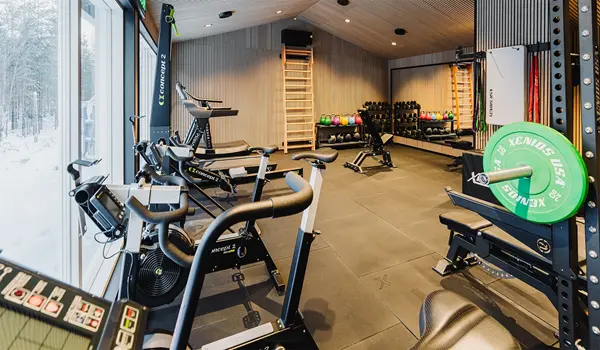
There is a large clubhouse that spreads across one lakh square feet. A swimming pool. Gym. Indoor games. Spaces for gatherings. But these facilities do not crowd the layout. They sit within green surroundings.
Morning walks feel calm. Evenings feel lighter. You do not feel boxed in by walls.
For many buyers, especially families, this matters more than high towers alone. Fresh air. Sunlight. Open views. These things add daily comfort.
North Bangalore once had farmland and wide fields. While the area has grown into a tech hub, that sense of space has not completely vanished.
Modern townships here try to respect that heritage.
In simple words, development does not always have to mean congestion. When planning is done with care, growth and greenery can exist together.
And that is what gives this corridor its unique charm.
ROI: The Numbers Behind the Growth
Prices in the Bagalur belt did not increase dramatically between 2021 and 2026. Slowly, they ascended. Approximately 12 to 15 percent annually in several areas. Not a lot of buzz. Just constant motion.
Compared to abrupt increases, that type of growth feels healthy.
The Purva Northern Lights pricing list for 2026 starts at about ₹1.3 crore for a few chosen properties. This is where a lot of investors start. They pose a straightforward query.
What could this look like by 2030?
The possession date is set for 15 January 2030. That gives a few years for the corridor to mature further. Metro work is progressing. Airport City expansion is active. Offices inside the Aerospace Park are already running.
When an area already has jobs and infrastructure moving forward, price growth usually has support behind it.
This is why people discuss the Purva Northern Lights investment potential 2026 with interest. It is not about guessing. It is about watching what is already happening around the project.
If the corridor continues growing at a steady pace, early buyers may see solid capital appreciation by the time keys are handed over. Entry stage often matters in real estate. Buying before full completion of surrounding upgrades can create better upside.
Of course, markets move in cycles. Nothing grows in a straight line. But areas linked to airports and active business parks tend to hold demand better than isolated zones.
In simple words, the return story here is connected to real movement on the ground. Roads are improving. Jobs are present. Connectivity is expanding.
For investors in 2026, it comes down to timing and patience.
The focus is not just today’s value. It is where North Bangalore may stand by the end of the decade.
Conclusion
North Bangalore has already changed a lot. But the journey is not over.
What started as farmland slowly became an airport zone. Then it turned into an aerospace and tech hub. Today, in 2026, it stands as one of the most active growth corridors in the city.
This shift did not happen by luck.
The airport brought attention. The KIADB Aerospace Park brought jobs. The Metro and STRR improved travel. Step by step, the north built its identity.
Many older parts of Bangalore grew fast but also became crowded. Roads narrowed. Space reduced. Prices went up quickly. North Bangalore moved slower at first. It had time to plan.
Now that patience is showing results.
Projects like Purva Northern Lights reflect this evolution. The land once held orchards and open fields. Today, it holds wide internal roads, open spaces, and a one lakh square foot clubhouse. Yet it still keeps nearly 80 percent of the area open.
That balance matters.
Buyers are not only looking for tall towers. They want breathing space. They want connectivity. They want jobs nearby. This corridor offers that mix.
The Purva Northern Lights price list 2026 may feel like today’s number. But the real story lies ahead. With possession expected by 15 January 2030, the surrounding infrastructure will likely feel more mature by then.
The growth cycle is still moving.
For investors who missed earlier booms in areas like Indiranagar or Koramangala, North Bangalore feels like another window. Not identical. But similar in spirit. A place growing before it becomes fully packed.
In simple words, the best phase of this corridor may still be unfolding.
North Bangalore has already proved it can evolve. And if the last decade is any sign, the next few years may shape it even further.



 24/7 Support
 Free Site Visit
 Unmatched Price